
Designing a Kitchen
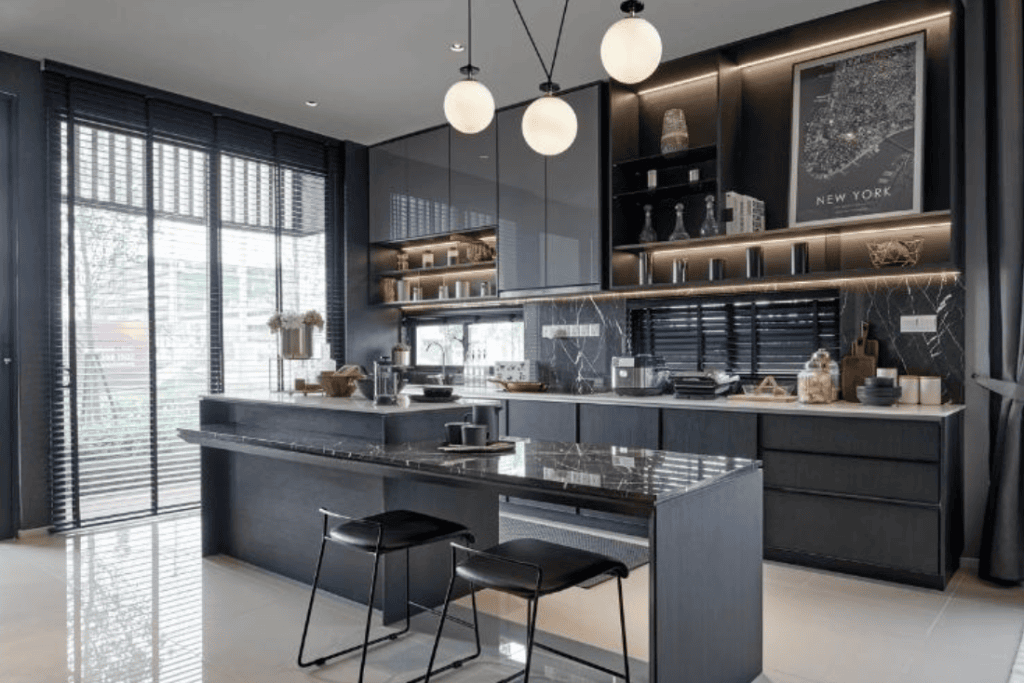
(Image by Joe Mark from Joe Mark’s Images via Canva)
Walk into any home during a holiday gathering, and you’ll notice something. Everyone ends up in the kitchen. It’s where conversations happen over chopping boards and where the smell of something good pulls the whole family together before anyone sits down to eat. If you’re planning a kitchen update this year, think beyond countertops and cabinet color. The real magic happens when every detail works together, from the lighting to the layout, to create a space people actually want to linger in.
This piece walks through some of the most talked-about kitchen design directions for the year ahead. Along the way, we’ll cover practical ways to bring them into your own home, whether you’re doing a full renovation or simply refreshing a few key pieces.
Why Black Is Becoming the New Kitchen Neutral
For years, white kitchens dominated design boards and home tours. Clean, bright, and easy to photograph, they made sense for a certain era of minimalism. But that’s shifting. Homeowners are now gravitating toward something with more depth and personality.
Black kitchens are having a real moment, and not in a way that feels cold or severe. Designers are pairing matte black cabinetry, dark stone countertops, and layered textures to create spaces that feel moody, warm, and surprisingly livable.
Where Black Works Best
- Cabinetry: Matte black lower cabinets paired with lighter uppers keep the room from feeling too heavy.
- Countertops: Dark stone with subtle veining adds contrast without overwhelming the space.
- Statement pieces: A black range hood above the stove can anchor the entire kitchen visually, the one element that draws the eye and ties everything together.
That last point matters more than people realize. A range hood isn’t just a functional necessity tucked above the stove. Done well, it becomes a sculptural centerpiece, much like a chandelier in a dining room. Brands like CopperSmith have built entire product lines around this idea. They offer handcrafted black range hoods designed to function as the focal point of a kitchen, not something you barely notice.
For homeowners drawn to that moody aesthetic but worried it might feel flat, a textured, dimensional hood can make all the difference. It’s often the gap between a kitchen that feels intentional and one that feels like an afterthought.
Balancing Drama With Warmth
The biggest mistake people make when introducing dark elements is treating them like an all-or-nothing decision. Going fully monochrome rarely works. The most successful black kitchens lean on contrast and texture instead.
A Few Ways to Soften the Look
- Pair black cabinetry with warm wood open shelving or a butcher block island top.
- Introduce brass, copper, or bronze fixtures to keep the space from feeling stark.
- Use under-cabinet or pendant lighting to add a soft glow against darker surfaces.
- Stick with a matte or satin finish rather than high gloss, which can feel sterile under bright kitchen lighting.
This balance is part of why hardware and finishes have become such a big conversation in kitchen design right now. Even a single element can shift the entire tone of a room, whether it’s a range hood, a faucet, or a set of cabinet pulls. A kitchen with the right mix of dark, warm, and metallic finishes feels collected and personal. Lean too far into one material, though, and it can start to feel like a showroom instead of a home.
Designing for the Way Your Family Actually Lives
It’s easy to get swept up in trend lists, but the best kitchens are designed around how a household actually functions day-to-day. Before chasing a specific look, sit with a few practical questions first.
Questions Worth Asking Before You Renovate
- Do you entertain often, or is this primarily a space for quick weeknight meals?
- Are there multiple cooks in the household who need workspace at the same time?
- Do kids need a spot to do homework or eat breakfast while parents prep dinner?
- How much storage do you actually need versus how much open shelving you want for display?
Answering these honestly will shape decisions more than any color trend ever could. A family that hosts large gatherings might prioritize an oversized island with seating. A household with younger kids might lean toward durable, easy-to-clean surfaces over delicate finishes.
Custom Touches That Make a Kitchen Feel Personal
One of the clearest shifts in kitchen design lately is a move away from cookie-cutter spaces. People want kitchens that reflect the people living in them. This is showing up in mixed hardware finishes, custom-built focal pieces, and small personal touches throughout the room.
Small Ways to Add Personality
- Choose one statement piece, whether that’s a hood, a faucet, or a lighting fixture, and let it set the tone.
- Mix metals intentionally rather than matching everything perfectly.
- Incorporate at least one handcrafted or custom element rather than relying entirely on stock finishes.
- Leave room for personal items like cookbooks, plants, or family photos. A kitchen shouldn’t feel too polished to actually use.
Working with an interior designer or builder can pay off here, especially for custom pieces like range hoods, sinks, or furniture. Sizing, finish, and material all need to work together. Many companies in this space now offer dedicated design support for exactly this reason, helping homeowners and design professionals land on a cohesive look rather than a mismatched one.
Bringing It All Together
A great kitchen doesn’t happen by accident. It’s the result of small, intentional decisions about color, material, and function that add up to a space people genuinely want to spend time in. Whether you’re drawn to the moody depth of a black kitchen or simply looking to refresh a few key details, start with how you actually use the space. Build outward from there.
If you’re in the early stages of planning a kitchen update, take time to gather inspiration. But don’t be afraid to prioritize livability over trends that might feel dated in a few years. The kitchens that age best are the ones built around real life, not just a moment in design history.