
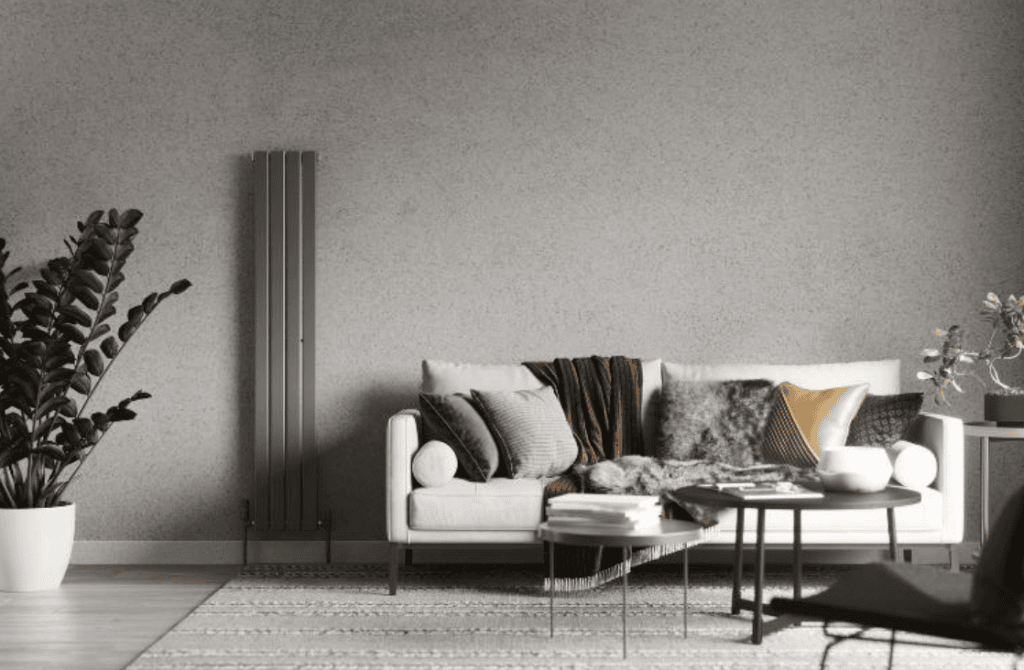
A beautiful home still needs to work. The rooms we enjoy most tend to get that balance right, with practical features that quietly contribute to the overall look rather than feeling like necessities we would rather hide.
This means some of the best decorating opportunities may already be on your renovation or shopping list. From radiators and shelving to mirrors and door handles, everyday fittings can add character, texture, and warmth while doing a useful job.
1. Make Heating Part of the Room
Radiators are easy to treat as purely practical, but their size and position make them a noticeable part of a room. Instead of disguising one behind furniture or a bulky cover, consider how its shape and finish work with the surrounding space.
Horizontal designs are particularly useful beneath windows or on walls where taller furniture limits your options. If you’re comparing styles, horizontal designer radiators at ukradiators.com show how a heating fixture can contribute to a room’s appearance instead of simply occupying wall space.
Think about proportion as well as appearance. A long radiator can visually follow the width of a window, while a more compact design may leave room for nearby shelves, artwork, or furniture. Most importantly, choose heating based on what the room actually requires before considering its decorative role.
2. Turn Open Shelving Into a Feature
Open shelving earns its place twice. It provides useful storage while giving you somewhere to display the things that make your home feel personal.
In a kitchen, shelves can hold everyday crockery, glassware, cookbooks, and jars. Living-room shelving gives books, framed photographs, plants, and collected objects a home. Even a small bathroom can benefit from a shelf for folded towels and attractive containers.
The trick is to leave some breathing room. Filling every centimetre can make open storage feel cluttered rather than considered. Group objects of different heights and keep frequently used items within easy reach.
3. Use Lighting to Shape the Space
Lighting has an obvious practical purpose, but the fittings themselves deserve attention. A pendant hanging above a dining table, a reading lamp beside an armchair, or a pair of wall lights can act as decorative features even when switched off.
Start by thinking about what happens in each part of the room. A single central ceiling light may illuminate the space, but it rarely suits every activity. Adding lamps and wall lighting lets you create smaller pools of light for reading, cooking, dining, or relaxing.
Scale matters here. A tiny pendant can look lost above a large dining table, while an oversized lamp may overwhelm a narrow side table. Pay attention to finishes, too. Repeating a material already found on handles, furniture, or other fittings can help the room feel connected without making everything match perfectly.
4. Let Mirrors Do More Than Reflect
Mirrors solve several practical problems at once. You need them for everyday routines, but they can also make good use of an empty wall and reflect light around a room.
Where you put one matters just as much as the frame. Before hanging a mirror, stand where it will go and check what it will reflect. A view of a window, artwork, greenery, or another attractive part of the room gives you more to look at than the back of a door or a cluttered corner.
You can also use the shape to change the feel of a wall. A tall mirror draws the eye upwards, while a wide design works naturally above a console or bathroom vanity. Decorative frames add another layer, but frameless styles suit rooms where you want a quieter look.
5. Choose Storage You Don’t Need to Hide
Storage often takes up a considerable amount of space, so treating it as an afterthought can work against the rest of your decorating choices.
Freestanding cabinets, baskets, benches with hidden compartments, and attractive boxes can keep everyday clutter under control while adding texture or colour. In smaller homes, furniture that handles more than one task becomes especially useful. An ottoman can store blankets while providing an extra seat, and a hallway bench can hide shoes while giving you somewhere to sit.
The best option depends on what you need to store. Closed cupboards work well for mixed items that would look messy on display. Baskets suit toys, throws, and other things you want to grab quickly. Matching the storage method to the contents makes it much easier to keep the room tidy.
6. Pay Attention to Handles and Hardware
Handles, knobs, hooks, taps, and other small fittings may seem insignificant individually, but you see and touch them every day. They can also change the character of existing furniture without requiring a major decorating project.
Replacing cupboard handles, for example, can give a kitchen or bathroom a subtle update. The same idea works with wardrobes, chests of drawers, and built-in storage.
Think about how the hardware feels as well as how it looks. A beautiful handle quickly becomes irritating if it is awkward to grip. In busy areas, choose finishes and shapes that can cope with frequent use and are easy to clean. Good hardware should earn its decorative role through practicality.
7. Treat Everyday Organisation as Decor
Some of the hardest-working objects in a home sit in plain sight. Coat hooks, peg rails, umbrella stands, magazine racks, and kitchen utensil holders all help control clutter, so there is little reason for them to look like temporary additions.
Wall-mounted hooks can fill an awkward stretch of hallway while keeping coats and bags off chairs. A peg rail in a kitchen can hold aprons, utensils, or small baskets. Even a simple tray can make bottles, keys, or toiletries look more orderly by giving them a defined place.
Choose organisers that suit the way your household already behaves. A decorative system only works if people find it convenient enough to use.
Final Thoughts
Good decorating does not always mean adding more objects. Sometimes it means paying closer attention to the practical features a home needs anyway.
Look around each room and notice the items that work hard but rarely receive much design consideration. Shelves, lighting, mirrors, storage, hardware, heating, and organisers all offer opportunities to make the space more attractive without sacrificing function. When useful features contribute to the room rather than compete with it, a home can feel both more considered and easier to live in.