
Somewhere between “one more lesson” and “okay, really the last one,” you notice the whole house is on Duolingo. One kid is guarding a Spanish streak like it’s a pet. Another is mumbling French verbs over cereal. And you, who only opened the app to see what the fuss was about, haven’t missed a day in weeks.
It’s free, it’s a little silly, and it works for almost any age. That’s a big part of why so many families end up learning together. Kids like the game side of it, teens like the quick wins, and parents like that screen time is going toward something useful. And since everyone starts at zero, nobody’s ahead. Your nine-year-old can out-score you on a Tuesday, and you can both laugh about it.
Then a few weeks in, the same question comes up. Is a Super Duolingo subscription worth paying for, or is free plenty? Honestly, it depends on your house. Who’s using it, how often, and what’s driving them nuts. If you’d like to browse digital membership options while you decide, LootBar Subscriptions is one place to look. Let’s sort it out.
Living with the free version
Free Duolingo isn’t a stripped-down demo. Everyone gets the full course library, short lessons, streaks, and leaderboards, and plenty of families never need more than that.
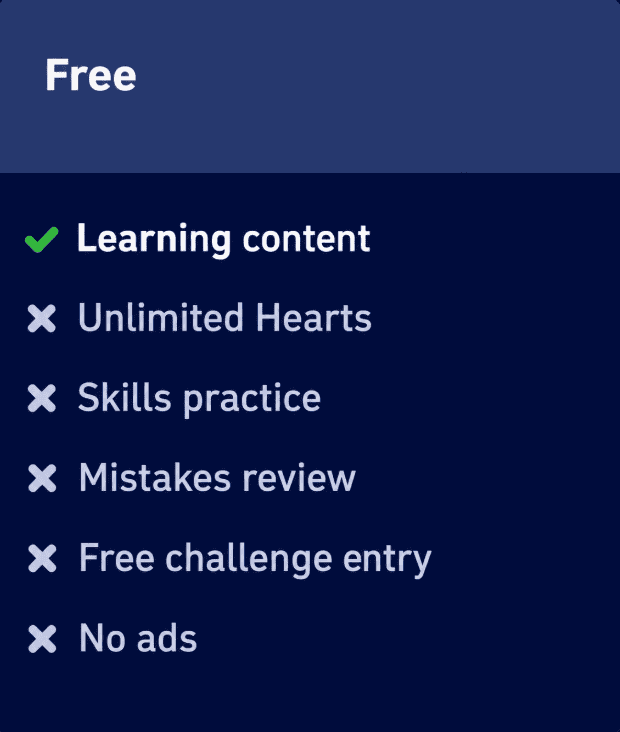
Three things tend to get in the way, though. Ads pop up between lessons, and while they’re brief, a young child can lose the thread the second one appears. Then there’s the daily limit. Depending on the account and device, free learners run into hearts (lost when you miss a question) or Duolingo’s newer energy system, which caps how much you can practice in a day. Duolingo tests these setups, so two people in your family may not see the same one. Finally, the tools for reviewing mistakes and targeting weak spots are mostly part of the paid plan.
None of this ruins the experience. But a child who’s excited and gets stopped mid-lesson may not come back to it that evening.
What Super Duolingo actually changes
The lessons stay the same. What changes is how much stands between your kids and the lesson.
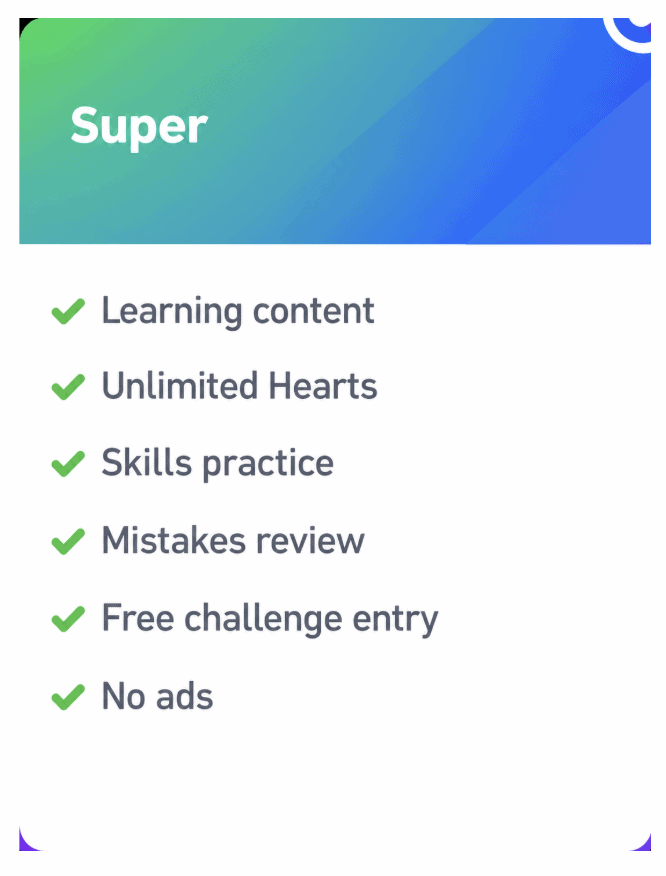
The ads disappear. Hearts or energy become unlimited, so a wrong answer or a longer session doesn’t end practice. Mistake review lets learners go back over what they missed, which turns errors into practice instead of frustration. Personalized practice focuses on each person’s shaky spots, so the ten minutes you have go further. And streak tools, such as streak repair, can rescue a streak after a sick day or a chaotic weekend (features vary, so check what your app shows).
Parents often say the biggest difference is emotional. Fewer interruptions mean fewer meltdowns, and more of that “just one more” feeling.
When more than one person is learning
If several people in your house use the app, the Family Plan is worth a look. It covers up to six people under one payment: the plan manager plus up to five others.
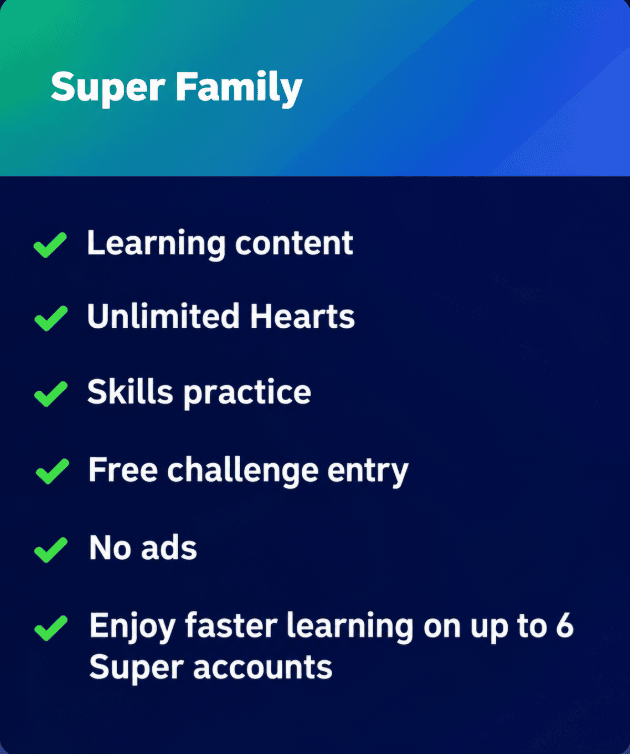
One thing that surprises people: it isn’t a single shared login. Each person gets their own account, so your preschooler’s progress never gets tangled up with your teenager’s.
For a single learner, an individual plan is the obvious comparison. Once two or three family members are practicing most days, the Family Plan often costs less per person. It also gives siblings something to compare and gives parents an excuse to join in.
Does a Super Duolingo subscription suit your household?
A month on the free version tells you a lot. Watch who logs in, how often, and what annoys them.
Staying free probably makes sense if nobody has built a routine yet, if the app comes out only a couple of times a week, or if money is tight right now. Paying before a habit forms is the easiest way to waste a subscription.
Super starts to earn its keep when several of you are practicing most days, when ads and limits keep cutting into lessons, or when a child gives up after getting locked out. It also helps if you have a real deadline, like a school requirement or a trip.
If you’re leaning toward a Super Duolingo subscription, look at what’s offered in your region first. Pricing shifts from place to place and over time.
A short daily routine that sticks
An app only helps if someone opens it. What tends to work:
- Choose one regular slot. Ten minutes after dinner, or just before bed.
- Have your kid teach you three new words. Teaching cements them faster than reviewing.
- Make streaks a family thing. Hit a milestone, and someone picks Friday’s movie.
- Look over missed questions together. The funny wrong answers are half the fun.
- Stick labels on the fridge and the front door, or greet everyone in the new language each morning.
- On chaotic days, do one quick lesson. That’s enough to keep the streak going.
Conclusion
For most families, free Duolingo is the right place to begin. It’s generous, it’s fun, and it gives you a real sense of whether your kids will stick with it. There’s no need to pay before you know that, and many households will be perfectly happy without ever upgrading.
Now, if the ads, daily limits, or a growing pile of learners start getting in the way, a Super Duolingo subscription, especially the Family Plan, can make life easier. No interruptions. Mistakes become practice instead of dead ends. And everyone works at their own pace under one plan.
So start free. Watch how your household actually uses it, and upgrade only if it clearly earns the money. Whatever you choose, the app is just a tool. What sticks is the ten minutes at the table, the goofy pronunciation, the look on a kid’s face after a full sentence. If you’d like to explore digital membership options along the way, LootBar Subscriptions is a good place to begin.